


Rules, not guesses
Every finding names the legal source and the version it was checked against.
EUDR compliance software
For importers of coffee, cocoa, rubber, palm oil, soy, cattle or wood.
€149 per workspace, per month, excl. VAT — after a 15-day free trial.
No demo. No webinar. Start with your own data.
You file in the official EU portal — Clearlane never files on your behalf.
EUDR applies from 30 December 2026 — a limited group of micro and small operators has until 30 June 2027. Which date applies to you?
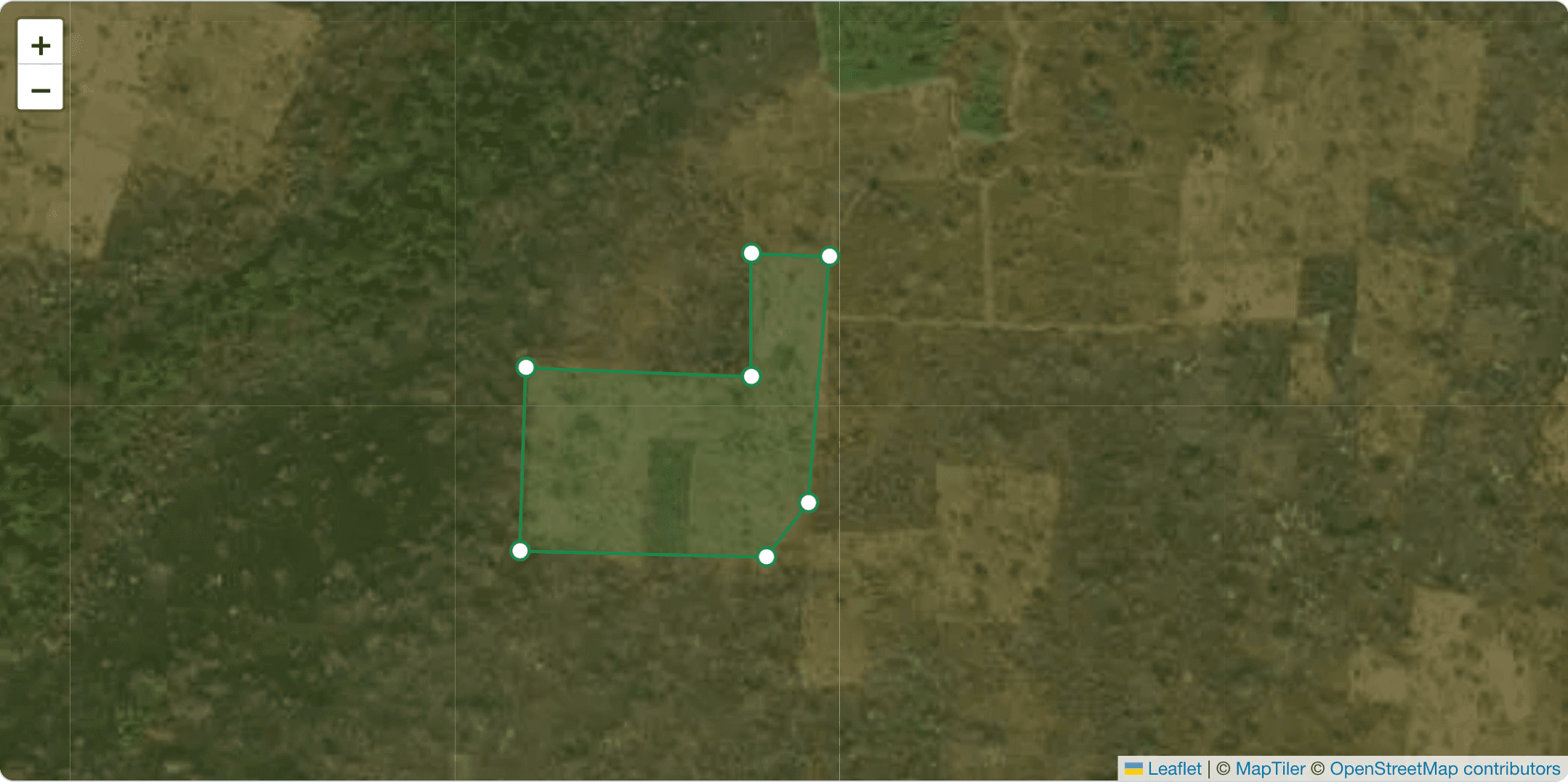
Trace the boundary. Check the geometry. Ask your suppliers. Seal the dossier.
Satellite deforestation evidence
A non-detection is supporting evidence for one EUDR criterion, not proof of full compliance.
Missing evidence blocks the record — it never counts as a pass.
See how we check your plotsThe EUDR readiness flow
Filing takes minutes. Getting the data right is the job.
Pick your customs code.

Built for scrutiny
Every finding names the legal source and the version it was checked against.
Send a secure link. Suppliers answer from any phone, even offline in the field.
Every input, correction and state change stays in the append-only record.
Supplier collection
Name the supplier and the gap — the request is built from what the engine found missing.
They open a link on any phone. No account, no app, works offline in a field.
The answer is checked against the cited rules before it reaches your record.
You approve every response. Nothing enters your evidence on a supplier’s say-so.
One spine, five duties
EUDR is the live product path. The other four sit on the same spine and are explained here as law.
Public EUDR path: free geodata checking and a cited readiness workflow.
Educational guides only — these modules are not part of the current public offer.
Check my scopeCited EU scope guide
Describe your product in plain words. Clearlane finds customs-code candidates; after you confirm one, cited deterministic rule packs show the scope map.
You're chatting with Clearlane's AI assistant. Answers come from cited official rules; it is not legal advice.